
 English

A Lifecycle Maintenance Plan for Hybrid Slip Rings in Filling Equipment Create a baseline before production starts Maintenance should begin during commissioning. Retain the approved drawing, circuit list, air-path diagram, port identification and installation torque values. Record the actual working voltage, normal air pressure, rotation speed and duty cycle. The reference configuration lists up to […]
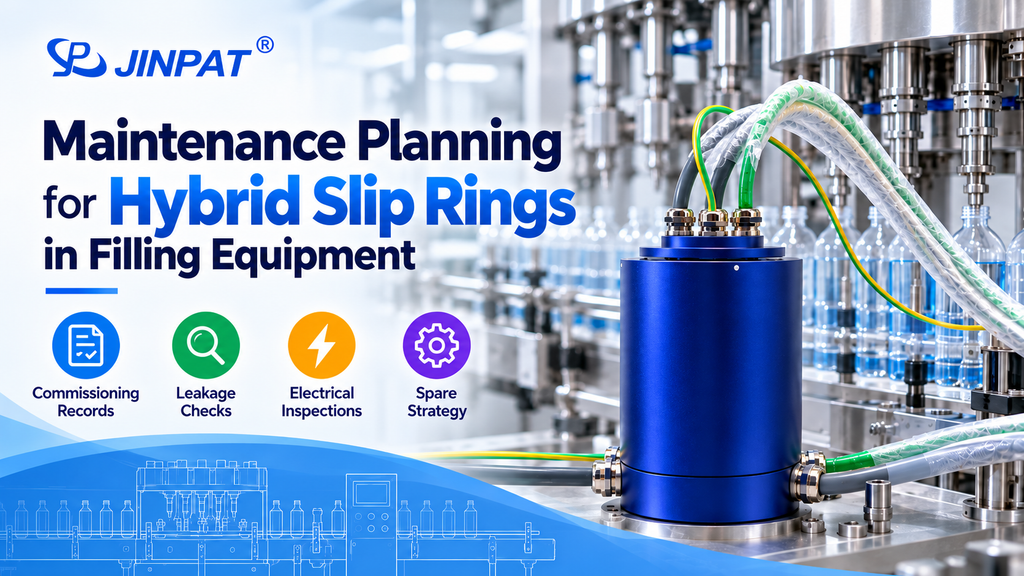
Maintenance should begin during commissioning. Retain the approved drawing, circuit list, air-path diagram, port identification and installation torque values. Record the actual working voltage, normal air pressure, rotation speed and duty cycle. The reference configuration lists up to 400 V and compressed air up to 10 bar, but the installed drawing is the controlling document.
Measure the values specified by the supplier under normal operating conditions. These may include circuit continuity, insulation resistance, pressure at the inlet and outlet, leakage rate and housing temperature. Photograph cable supports, hose routing and the anti-rotation arrangement. Later inspections are more useful when they can be compared with a known baseline.
Operators can monitor unusual noise, vibration, odor, visible contamination, loose hoses, damaged strain relief and unexpected pressure loss. A change in valve response or actuator timing may indicate a pneumatic restriction elsewhere in the system, so maintenance should confirm the full air path before attributing the problem to the rotary joint.
Inspect hoses, fittings and port labels for damage or loosening. Compare pressure drop and leakage with the commissioning method. Use the approved medium and test pressure. Never search for leaks with an unsafe method near energized electrical equipment. If seals or fittings are replaceable, follow the supplier procedure and material specification.
During an authorized shutdown, inspect accessible terminals for looseness, discoloration or contamination. Compare any specified resistance or insulation measurements with the baseline and supplier limits. Confirm that protective-earth and shield connections remain in their documented positions. Do not open sealed areas unless the maintenance manual allows it.
Filling lines can require cleaning, requalification and product-change procedures after a stop. Combine detailed slip-ring inspection with an existing maintenance window where possible. Base the interval on operating hours, revolutions, pressure cycles, electrical load and environment rather than calendar time alone.
If recipes or connected loads change, review the original electrical and pneumatic assumptions. A higher actuator demand can increase pressure drop. A new heater, motor or valve bank can change current and switching behavior. Treat those changes as engineering modifications, not ordinary maintenance.
Keep the exact internal product and project identification in the maintenance system even though it must be hidden from public pages. Record approved alternatives, cable and hose assemblies, connector parts and supplier contacts. Decide whether the plant should stock a complete unit or only permitted service items based on lead time and downtime cost.
Store elastomeric parts and complete assemblies within the supplier’s limits. Protect open pneumatic ports from contamination. Use revision control so that an older spare is not installed after the machine design has changed.
Russian transport and storage conditions can be colder than the operating environment. The available source row does not provide a low-temperature rating. Ask for approved storage and operating limits, condensation precautions and stabilization time before energizing or pressurizing the unit.
A documented lifecycle plan replaces vague ‘maintenance-free’ language with observable conditions, defined limits and clear actions. It also gives the plant evidence for service decisions when replacement logistics are slow.
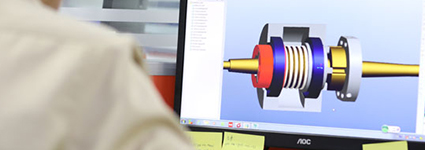
JINPAT photovoltaic slip rings have high quality and competitive price. JINPAT has provided hundreds of models of electro-optical rotary joints for both civil and military industries. Most of JINPAT electro-optical slip rings have high transmission capacity. High-end slip rings can transmit 4K@60FPS high-definition video signals. OVERVIEW Design product sketches and models using SOLIDWORKS 3D Computer […]

With many years of experience in managing various types of projects, the management team of JINPAT is able to eliminate all obstacles that arise during the execution of projects to ensure that the technology is followed and the products are manufactured successfully. In addition, JINPAT understands the importance of good documentation. Documents such as certificates […]
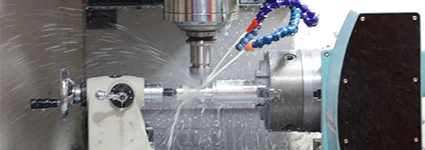
JINPAT carries out precision machining of all components of its products. At all stages of production, from drawing to molding, JINPAT is committed to being precise and ensuring that the best slip rings are produced. With the ability to machine parts to a tolerance of 5 microns, our experienced, highly skilled team uses the latest […]

JINPAT welding technicians are experts in Gas Metal Arc Welding (GMAW), Flux Cored Arc Welding (FCAW), Gas Tungsten Arc Welding (GTAW) and Semi Metal Arc Welding (SMAW). They are dedicated individuals who value precision and aesthetics in the production of machine components. OVERVIEW Welding procedures comply with codes such as ASMEIX, AWS, DIN, API, B31.1, […]
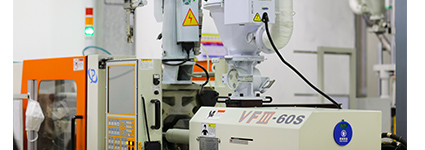
JINPATElectronics is a customer-oriented corporation. We do our utmost to provide our customers with high-standard solutions for transmission including rotation. Up to now, JINPAT has provided its services to more than 10,000 customers worldwide. Each slip ring produced by JINPAT undergoes a series of rigorous and systematic inspections and durability tests before being delivered to […]
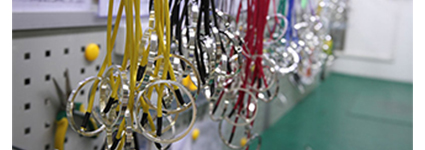
With advanced testing and measuring devices, JINPAT’s Quality Control Department conducts systematic inspections of our products. Our quality measurement system complies with ISO 9001:2015. JINPAT has great confidence in its products and has earned a good reputation for producing products of unrivaled quality. REVIEW Detailed inspection and provision of data in the form of documentation […]